World Migratory Bird Day | 2026
Today we celebrate the birds that fly back and forth between their breeding and wintering grounds twice a year, and with them, the thousands of birds that undertake their journeys along the African-Eurasian flyway that crosses our country.
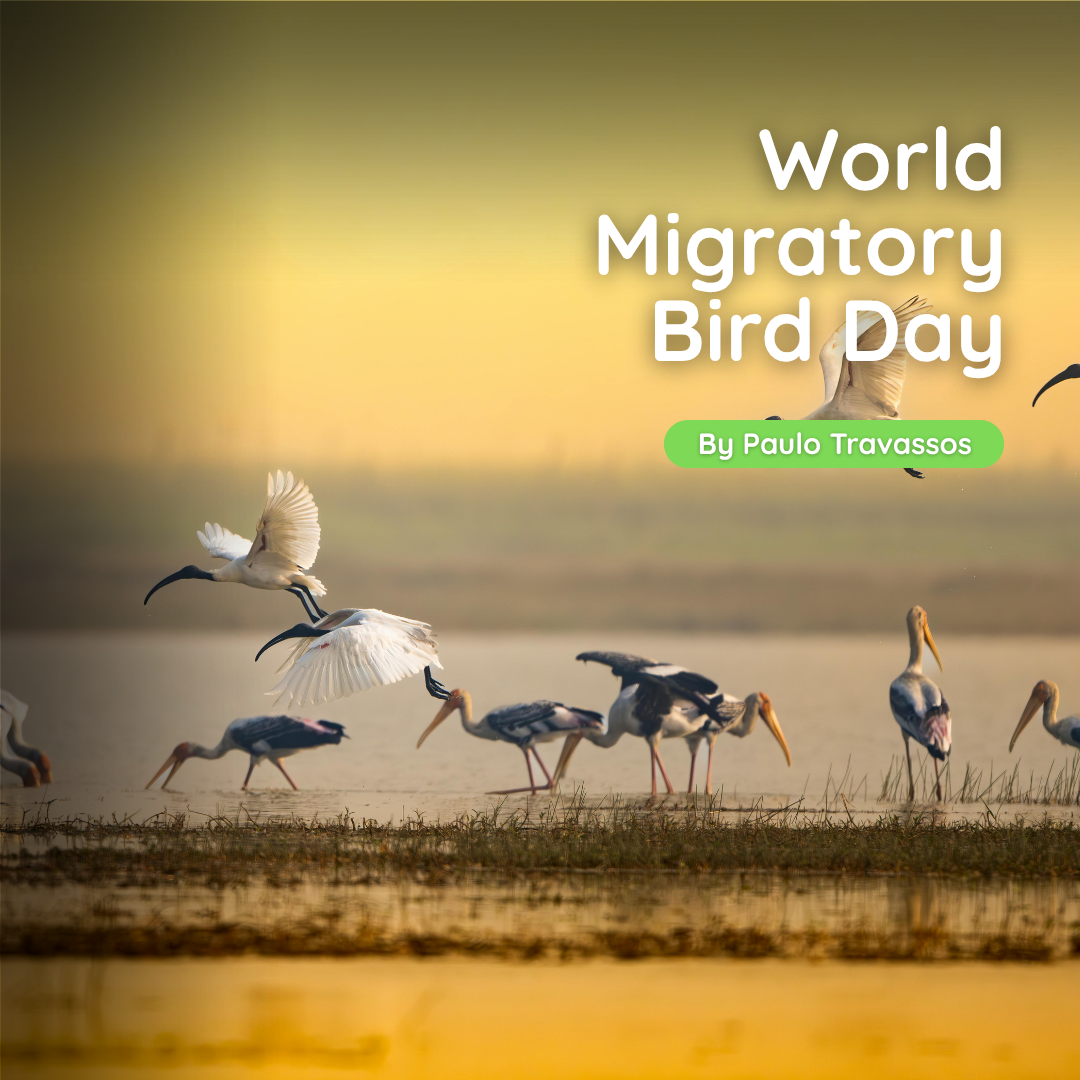
World Migratory Bird Day
Today we celebrate the birds that fly back and forth between their breeding and wintering grounds twice a year, and with them, the thousands of birds that undertake their journeys along the African-Eurasian flyway that crosses our country.

With the arrival of autumn, we can observe birds such as the black flycatcher, the red-backed shrike and the northern wheatear (among others) which, having arrived from the north of the European continent – either after a short break in their journey or after breeding in our country – set off from here towards the south to reach various locations in sub-Saharan Africa to spend the winter. Other birds, however, arrive from more northerly latitudes to stay here and take advantage of the milder temperatures that will prevail until the end of winter.
However, this migratory journey is not without its dangers, and bird populations of various species have seen a 41 per cent decline in numbers as a result of multiple factors, which cause high mortality rates along this major route passing through Portugal.
Against a backdrop of declining migratory bird populations worldwide, a large number of representatives from NGOs dedicated to bird and environmental conservation, scientists, politicians, governments and financial institutions gathered in Nairobi earlier this month a large number of representatives from NGOs dedicated to bird and environmental conservation, scientists, politicians, governments and financial institutions gathered in Nairobi earlier this month to sign a joint declaration of commitment to the protection of birds and their habitats along their migratory routes, building on the important conservation work being carried out worldwide.
The Laboratory of Riverine and Terrestrial Ecology (LEFT), has, over the years, been collaborating in this joint effort within Portugal, contributing to the development of knowledge about birds and participating in research based on indicators and across different ecological contexts, notably the mountain ranges of northern and central Portugal, the rivers Sabor, Tua, Douro, Tâmega and their tributaries, the River Almonda and the south-west coast.
Start date: Sunday, 11th October 2026
End date: Sunday, 11th October 2026